

I’ve been noticing a pattern that’s honestly a little frustrating to watch.
You’ll see a creator with real taste. Real effort. They post consistently. You can tell they care. And yet nothing really happens. A handful of views. A few likes. No momentum.
Meanwhile, someone else posts something objectively worse, and it takes off.
If you spend enough time online, you’ll hear the same explanation over and over: “The algorithm hates me.”
It’s comforting. It turns invisibility into bad luck instead of something structural.
But after watching this for years, I’ve come to a simpler and more uncomfortable conclusion:
Most creators stay invisible because they’re publishing without an outcome.
Not “outcome” in the sense of fame. Not millions of followers. Not virality.
I mean something much more practical.
What happens after someone enjoys your content?
Where does their attention go next?
Because attention, by itself, is fragile. It fades fast. And if there’s nowhere for it to land, it disappears.
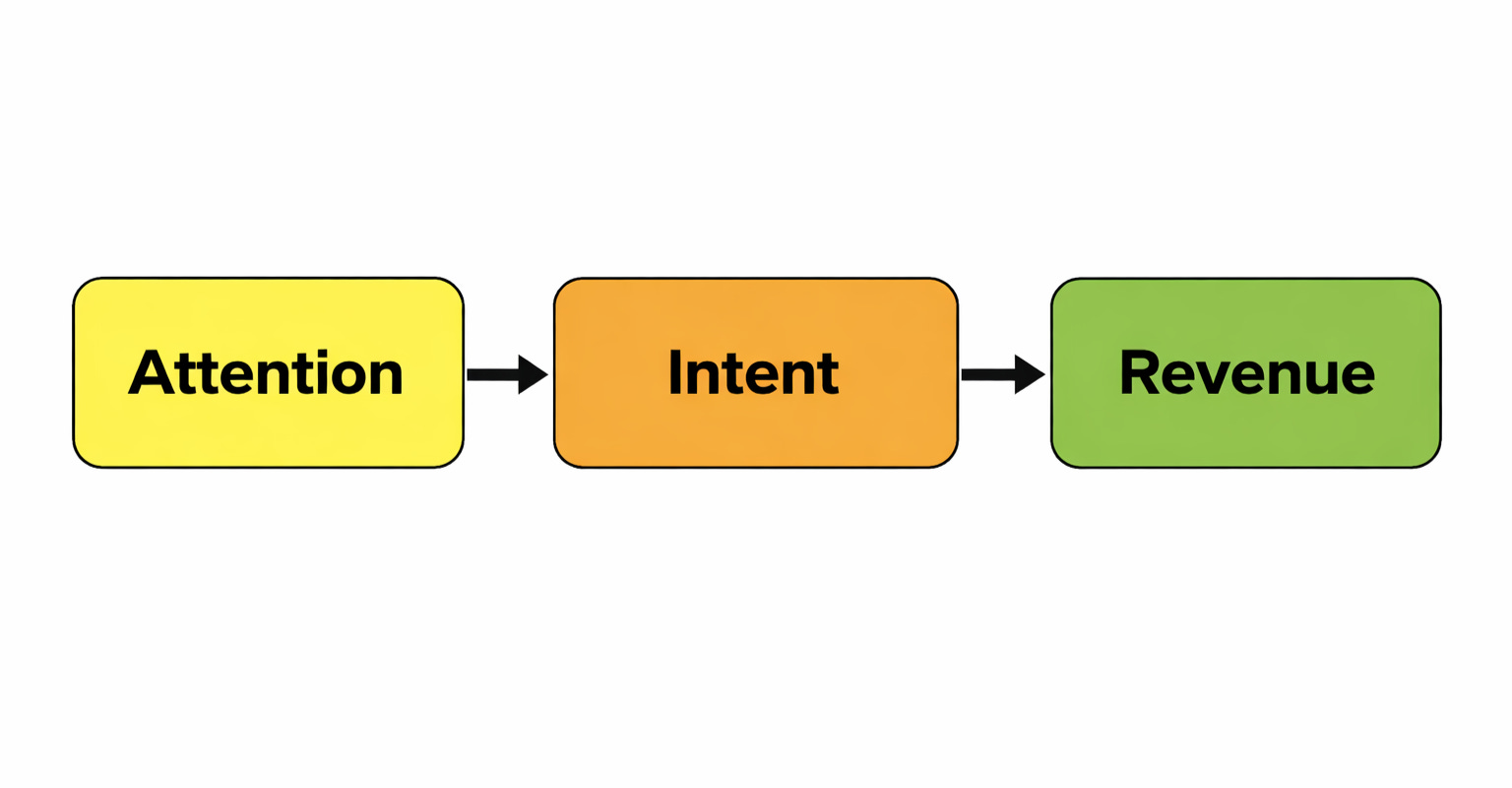
This is the through-line for everything that follows:
1. Why invisibility happens
2. What a practical AI stack looks like in 2026
3. How small audiences turn into real money
Why most creators stay invisible (and it’s not because of quality).
I’ve been thinking about something that quietly frustrates a lot of creators. Here’s the uncomfortable truth most people don’t say:
Platforms don’t reward effort. They reward momentum. Not in a malicious way. In a mechanical way.
A platform notices patterns like this:
Someone sees your content → they engage → they stay longer or come back → their experience improves.
That’s the loop.
But when you post something with no next step, you’re essentially telling the viewer:
“Thanks for stopping by. That’s it.”
No continuation. No direction. No reason to stay in your world.
This is why the “100-view trap” feels so frustrating. It’s not always that your content is bad. It’s that it doesn’t lead anywhere.
Here’s what invisible creators often do without realizing:
• Their content has no destination. People enjoy it, but there’s nowhere to go next.
• They don’t give the viewer a role. No simple action like replying, watching part 2, downloading something, or joining.
• They have no offer. And without an offer, there’s no signal. The platform can’t clearly understand who this content is for.
Offers aren’t just about making money. They create structure. They create intent. They create continuity.
And platforms respond to continuity.
Even YouTube has said, in various ways over the years, that recommendations are driven by viewer behavior and satisfaction - not by effort alone. Effort makes content. Offers make ecosystems.
What counts as an “offer” (even if you’re small)
Let’s make this real for a second, because the word “offer” tends to scare people off.
When most creators hear “offer,” they immediately think it means selling a course, pushing a product, or asking strangers for money. That’s not what this is about. An offer isn’t defined by price. It’s defined by direction.
For example, an offer can be:
A next piece: “If this helped, read part 2.”
A free asset: a checklist, template, or swipe file.
A reply prompt: “If you want my exact process, reply ‘process.’”
Or yes, something paid: a consulting call, product, membership, or paid post.
All of these count.
Because the real point isn’t the format. The point is that you’re turning passive attention into active intent.
A quick fix you can implement this week
You don’t need a funnel. You don’t need a product. You don’t need a big audience.
You just need one clear next step.
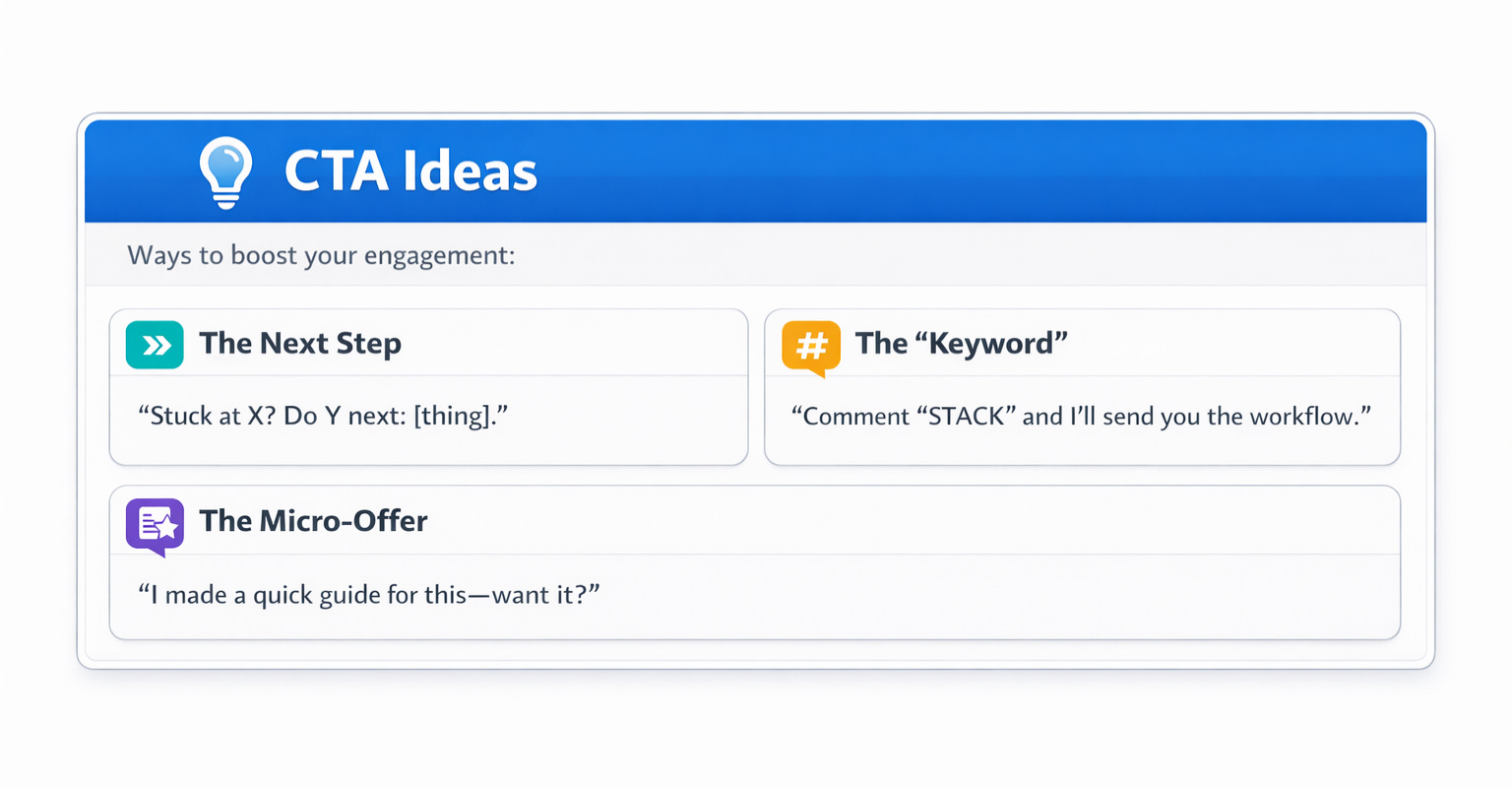
Pick ONE of these and start adding it to everything you publish:
You don’t need a funnel. You don’t need a product. You don’t need a big audience.
You just need one clear next step.
Pick ONE of these and start adding it to everything you publish:
1. The Next Step CTA
Guide the person forward.
“If you’re stuck at X, do this next: [specific thing].”
You’re helping them move, not just observe.
2. The “Keyword” CTA
Open a small door to deeper interaction.
“Comment ‘STACK’ and I’ll send the workflow.”
This turns passive viewers into participants.
3. The Micro-Offer
Share something small but genuinely useful.
“I made a one-page guide for this. Want it?”
This creates trust faster than any amount of posting ever will.
None of this is about becoming salesy. It’s about respecting the attention someone just gave you.
Right now, most creators publish something, get a few views, and then… nothing happens. No next step. No continuation. No relationship. Just silence.
It feels like throwing your work into a void.
An offer fixes that.
It gives your content gravity.
The AI stack creators should use in 2026
Most “AI stacks” you see online are basically just shopping lists. That’s not very helpful, because the tools themselves change every month.
Instead, it helps to think like an operator. What you really want are functions in your workflow that save you time, improve the quality of your work, and reduce creative burnout.
Here’s a simple stack that works whether you have 200 followers or 200,000:
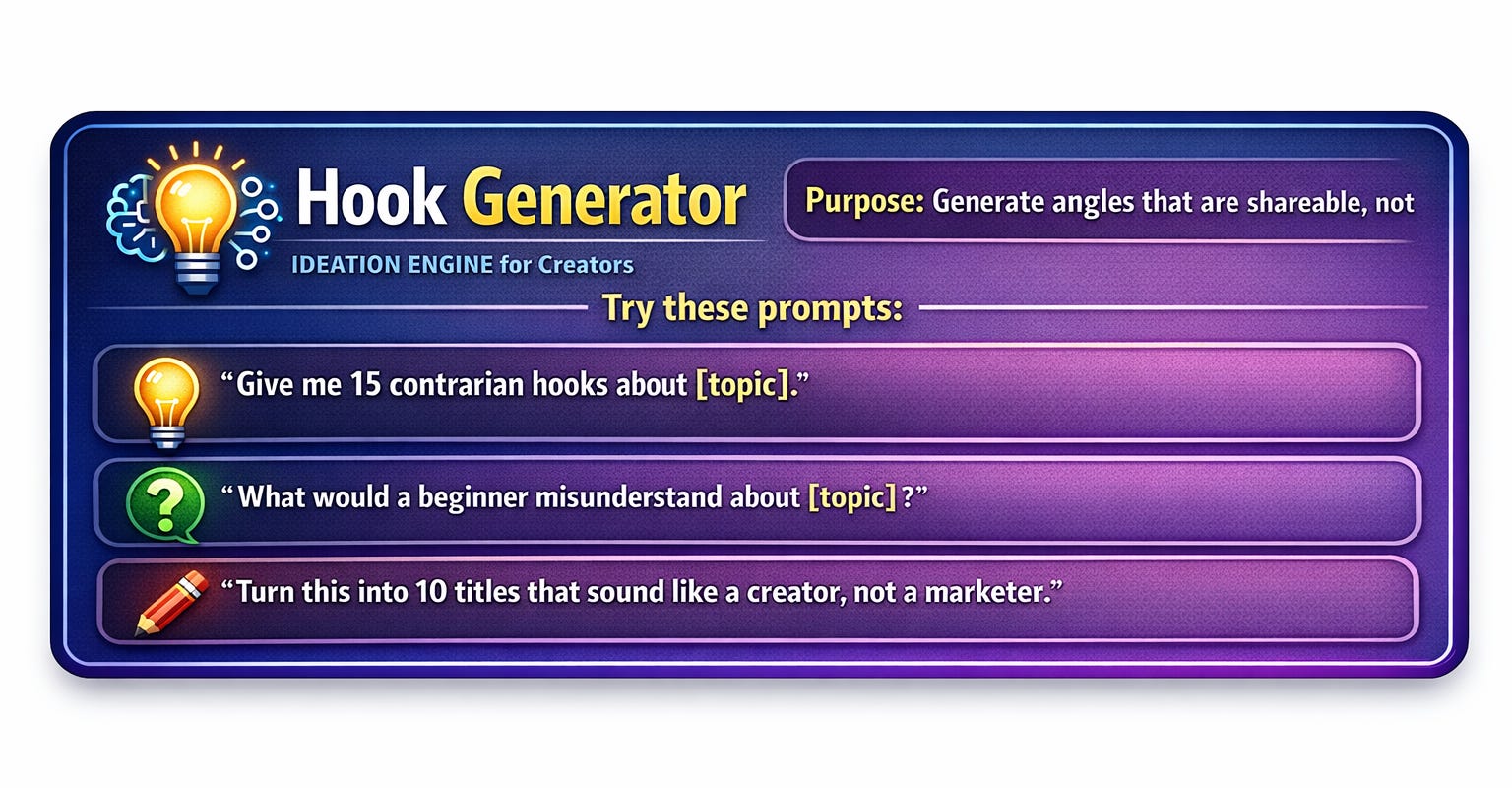
1) Ideation Engine
Purpose: generate angles that people actually want to share, not generic ideas everyone has already seen.
Use it for:
“Give me 15 contrarian hooks about [topic].”
“What would a beginner misunderstand about [topic]?”
“Turn this into 10 titles that sound like a creator, not a marketer.”
2) Research Engine
Purpose: get context quickly so your content doesn’t feel shallow.
Use it for:
summarizing a trend
pulling key points from a report
building a quick “what changed in 2026” section
Creator-friendly sources matter here. For example, ConvertKit publishes creator economy reports that are clear, practical, and actually useful for working creators.
3) Draft Engine
Purpose: reduce the friction of starting from a blank page.
A workflow that doesn’t make you sound like AI:
you write the messy bullet outline
AI turns it into a first draft
you rewrite the first 20% and the last 20% in your own voice
That’s usually where your real voice lives.
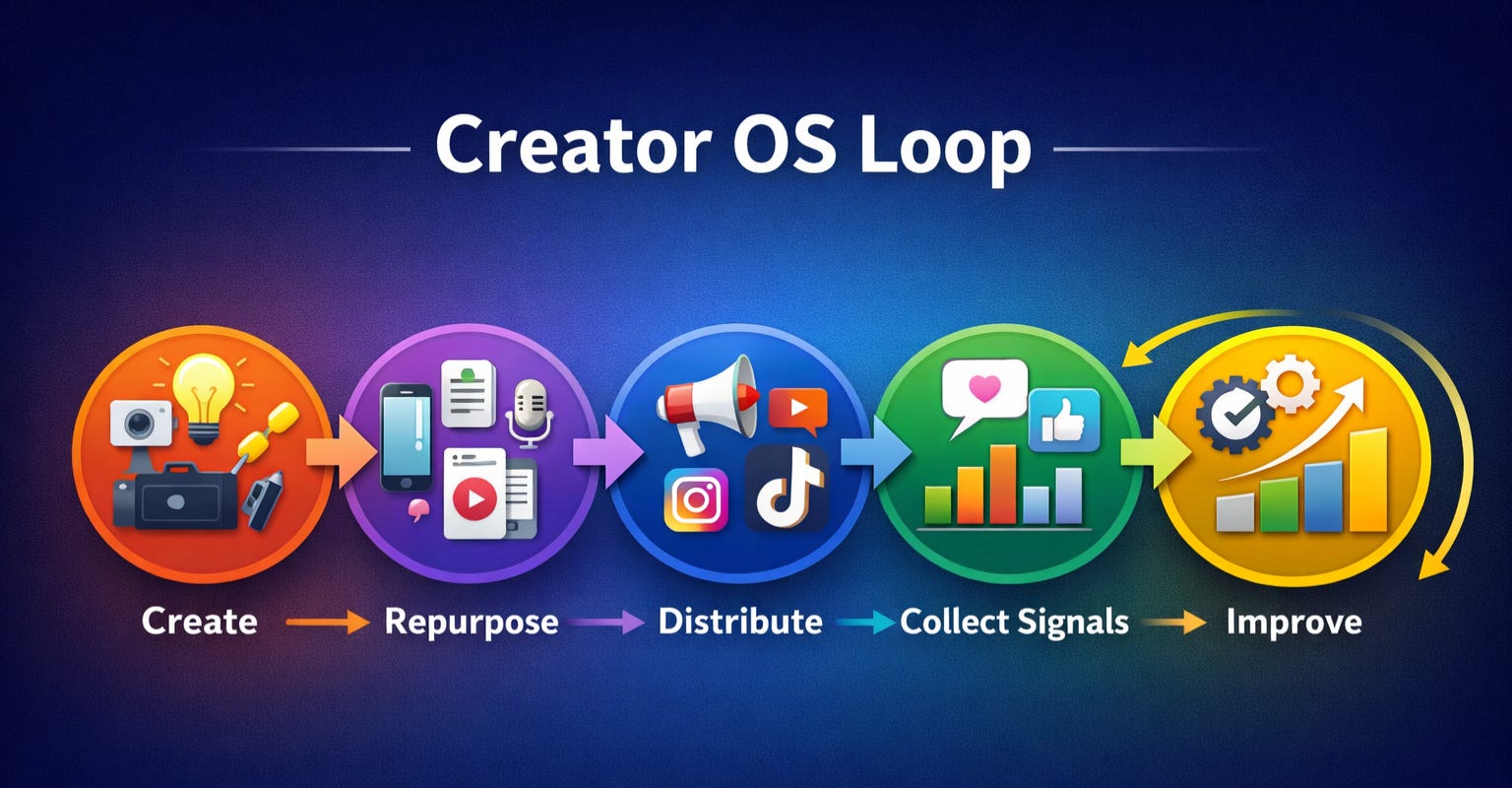
4) Repurposing Engine
Purpose: turn one “core asset” into many pieces of content.
Example:
one long post → 6 short posts
one video → newsletter summary + 10 hooks + 3 scripts
one thread → carousel outline + short-form script
If you’re still rewriting everything manually, you’re choosing extra work.
5) Feedback Engine (the underrated one)
Purpose: get clear on what’s actually working instead of guessing.
Simple version:
collect comments, DMs, and replies into one document each week
ask AI: “What pains keep repeating? What language do people use? What are they asking for?”
This is how you stop just “creating content” and start building a signal-driven loop.
From followers to revenue: small audience leverage
There’s a common myth that you need massive reach to make meaningful money.
But the more useful truth is quieter, simpler, and honestly more encouraging:
You don’t need millions of followers. You need a small number of true fans.
Kevin Kelly’s “1,000 True Fans” idea is still one of the most important mental resets a creator can have.
Not because the math is perfect.
But because it breaks the illusion that you need to go viral to make this work.
Platforms like Substack show this clearly and quietly. A few hundred paying subscribers can already support a creator in a real way. And a few thousand can turn into something genuinely lucrative.
The monetization ladder (beginner-friendly)
If you’re at the beginner or intermediate stage, it helps to keep things simple. You don’t need a complicated system. You just need one clear ladder.
Step 1: Paid for access
membership
paid newsletter
community
Step 2: Paid for outcomes
coaching
service
audits
Step 3: Paid for leverage
digital product
template
course
toolkit
Now here’s the tactical part.
If you have under 1,000 followers, start here:
Pick ONE problem your audience keeps mentioning in comments or DMs.
Create ONE small offer that makes that problem easier to solve.
Price it so someone can say yes without needing to overthink it.
For example:
$19 template
$49 workshop
$99 audit
$10/month membership
The goal isn’t to maximize revenue right away.
The goal is to prove to yourself that you can turn attention into trust, and trust into a transaction.
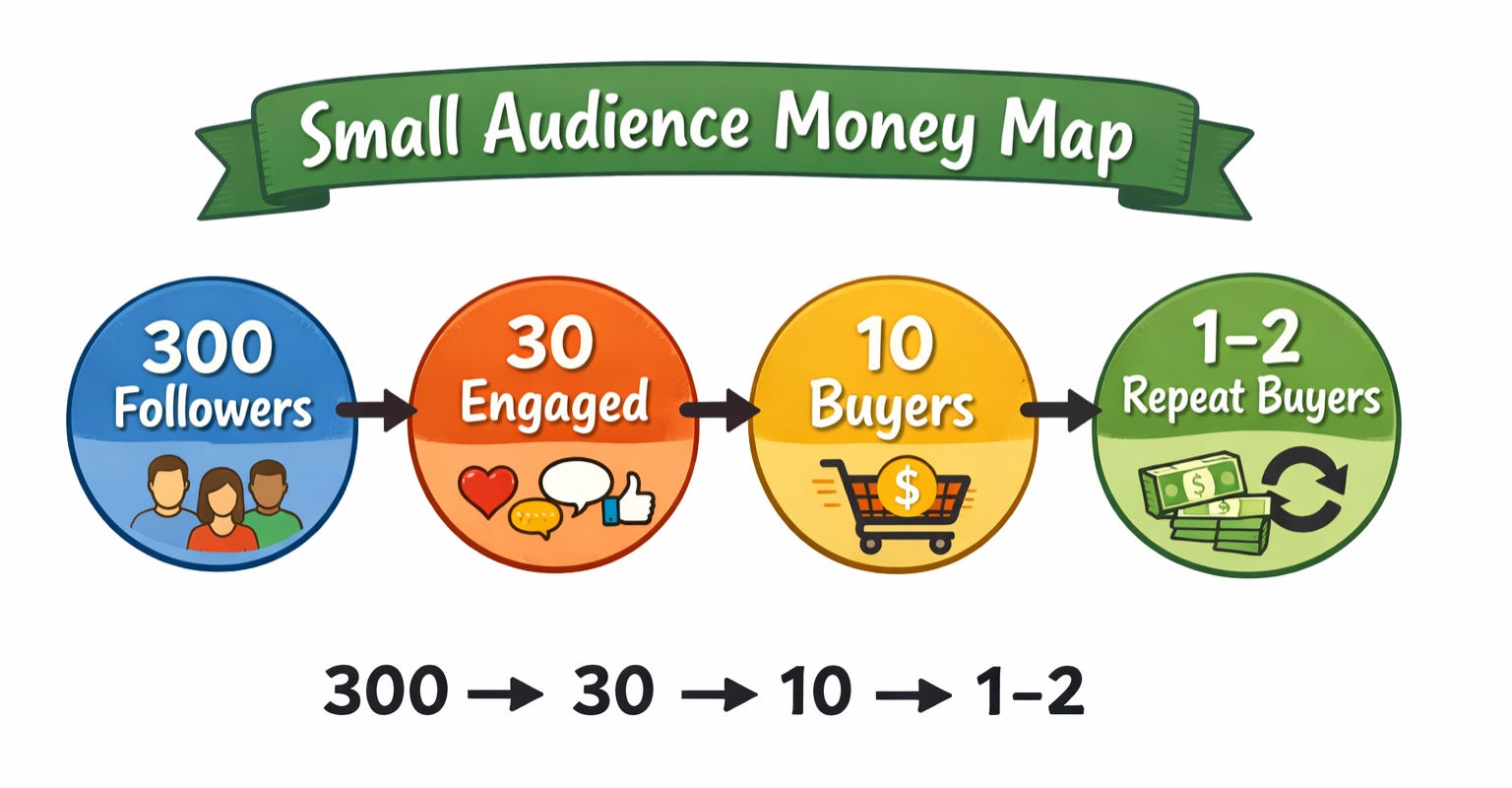
Because once you can do that with 300 people, growth becomes a distribution problem, not a credibility problem.
A simple closing thought
If you still feel invisible, don’t jump to the conclusion that you’re untalented.
More often, it just means your system is missing one key piece:
a destination (an offer or a clear next step)
leverage (using AI for the right functions)
a conversion path (a way to monetize a small audience)
The encouraging part is that none of this requires you to be “chosen” by the algorithm.
It simply requires you to start acting like a creator who’s building something real - an engine, not just individual posts.